Washing machines are the unsung heroes of our homes today. We count on them to clean our clothes quickly and well every day. But what if you put your favorite clothes in the machine, hit the start button, and nothing happens? You might hear a faint humming or clicking sound, but the drum won’t fill with water. If your washer won’t fill up with water, it’s very annoying and can ruin your plans right away.
Mechanical problems can happen to any appliance anywhere in the world, but people who live in the Treasure Valley face a very specific environmental problem. A broken motor or a fried computer circuit board may not be the cause of your laundry unit’s malfunction. Most likely, the issue stems from the chemicals in the water that flow directly into your home.
We’re going to look into why washers don’t fill up in this detailed troubleshooting guide. We will talk about how geography affects your home systems and give you useful tips on how to get your laundry routine back on track.
Understanding the Hard Water Reality in Our Region
To understand why your appliance isn’t functioning properly, we must first examine the ground beneath us. The area that includes Southwestern Idaho and Eastern Oregon is known for its beautiful scenery and fertile soil. But the water we get from our local underground aquifers has a secret property that appliances really don’t like. Our water is very hard.
Hard water is just water that has a lot of dissolved minerals in it. Calcium and magnesium are the two main things that cause this condition. Water naturally dissolves minerals as it moves through limestone and rock layers underground. It then carries these minerals straight into your home’s plumbing system.
Limescale is the chalky, rock-formed white stuff that mineral-rich water leaves behind when it flows into your home and goes through an appliance. Over time, this scale builds up inside your pipes, fixtures, and laundry units because you constantly use them. This constant mineral attack is the main reason why homeowners in the area often search for professional help to fix their systems.
How Mineral Buildup Stops Water from Flowing
You might be wondering how tiny minerals in your tap water can keep a powerful appliance from filling up. The process takes a long time, so it’s hard to see until the machine stops working completely. Limescale can completely block three main areas.
Clogged Inlet Valve Mesh Screens
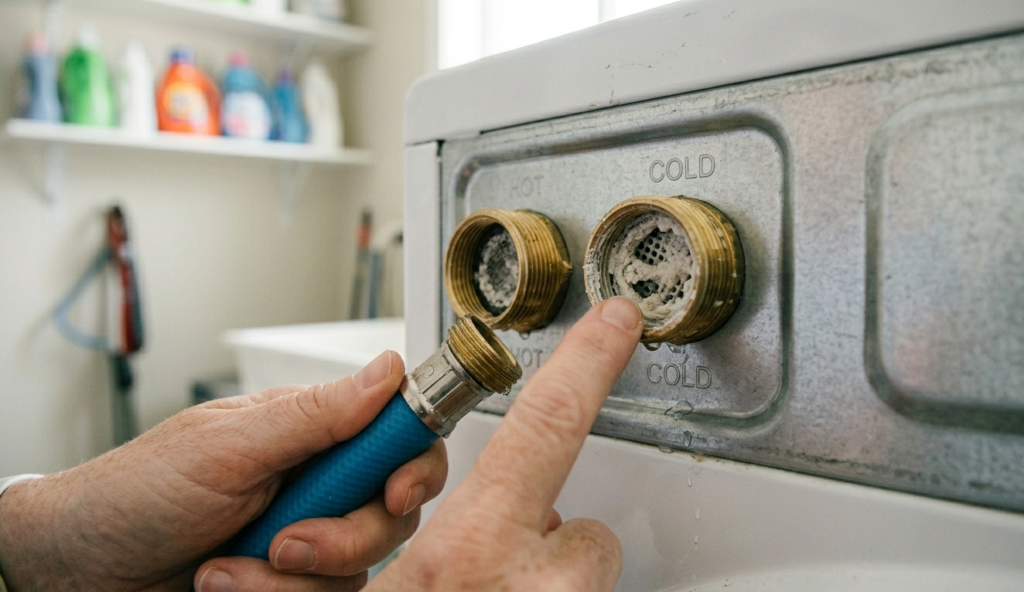
This is by far the most common problem that local technicians have to deal with. There are small plastic mesh filters where the hot and cold water hoses connect to the back of your washing machine. These filters are made to stop sand, grit, and pipe rust from getting inside your washer and damaging its delicate parts.
The mesh holes are so small that they are the perfect place for calcium to build up. Minerals stick to the plastic mesh as hard water flows through. Eventually, the screen becomes completely calcified, forming a solid wall that keeps water from getting through. Whirlpool has a detailed guide for this problem: Whirlpool Front-Load Washer Not Filling.
Seized Water Inlet Valves
If the minerals can pass through the mesh screens, they will attack the water inlet valve. This valve is an electromagnetic part that receives a signal from your washer when it’s time to fill up. The signal opens the valve so water can flow in and closes it when the tub is full. These mechanical valves get stuck in the closed position because of hard water, which means that not even a drop can get through.
Blocked Pressure Switch Tubes
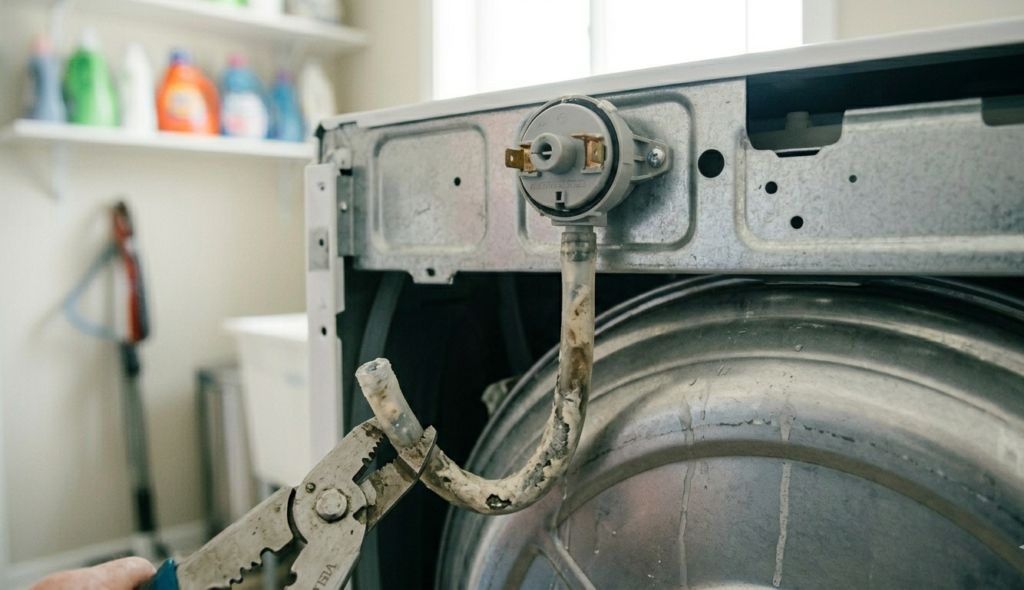
Modern washing machines don’t just guess when they’re full. A small plastic air tube and a physical pressure switch connect to the washing machine. When the drum fills with water, the air pushes the tube up and turns off the water. Heavy soap scum and minerals from hard water can mix to make a thick paste that blocks this tube. This trick makes your machine think it’s already full by giving it a false reading.
Other Common Reasons a Washer Won’t Fill
Local water conditions are a big reason for this headache, but it’s important to remember that appliances are complicated machines. Your headache could be caused by other common mechanical problems. Let’s examine a few other factors before assuming it’s solely a plumbing issue.
Faulty Lid Switches and Door Latches
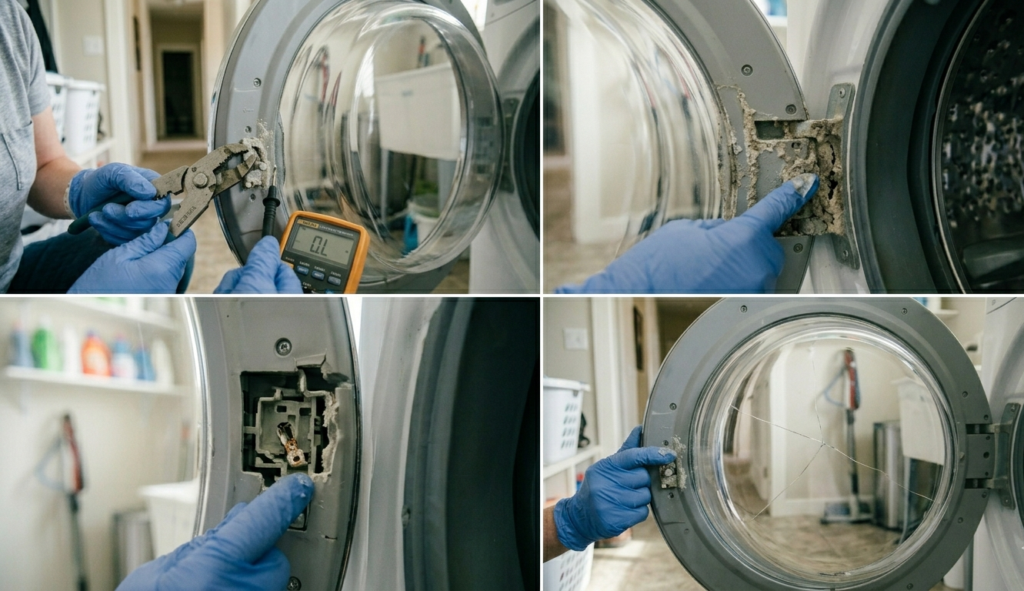
Most modern top-load and front-load washers are set up so that they can’t work unless the door is securely closed and locked. This is for safety reasons. The machine won’t fill if the plastic tab on the lid is broken or if the electronic door latch has shorted out. It just sits there quietly because it thinks the door is wide open. Samsung provides a helpful troubleshooting page on what to do when your washer won’t fill or drain.
Bent or Pinched Supply Hoses
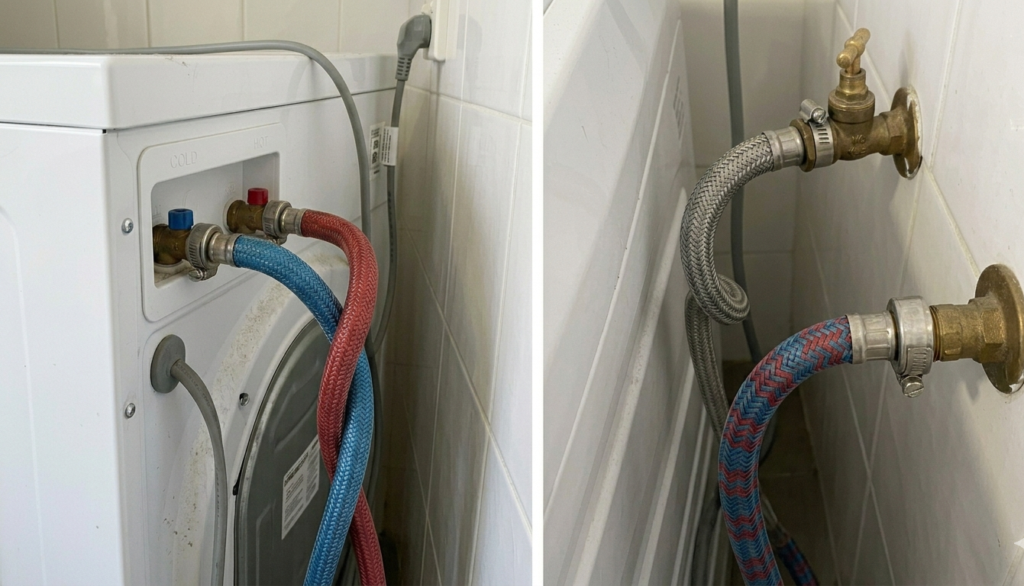
The simplest answer is sometimes the right one. The rubber hoses in the back may have kinked if you just pushed your washing machine against the wall or if it shook a lot while it was spinning. A sharp bend in a rubber hose will completely stop the flow of water, just like stepping on a garden hose in the yard.
Practical Troubleshooting Tips for Homeowners
Before you panic and buy a new unit, try some safe methods to diagnose the problem. Taking a few minutes to look at the unit can save you time and money.
Check the Faucets and Hoses
First, pull the machine out a little bit and look at the hoses that carry hot and cold water. Make sure they are completely straight and don’t have any sharp bends. Next, check to see that the real water faucets on your wall are all the way open. It sounds easy, but handles can sometimes be bumped and turned off by accident.
Inspect the Inlet Screens Safely
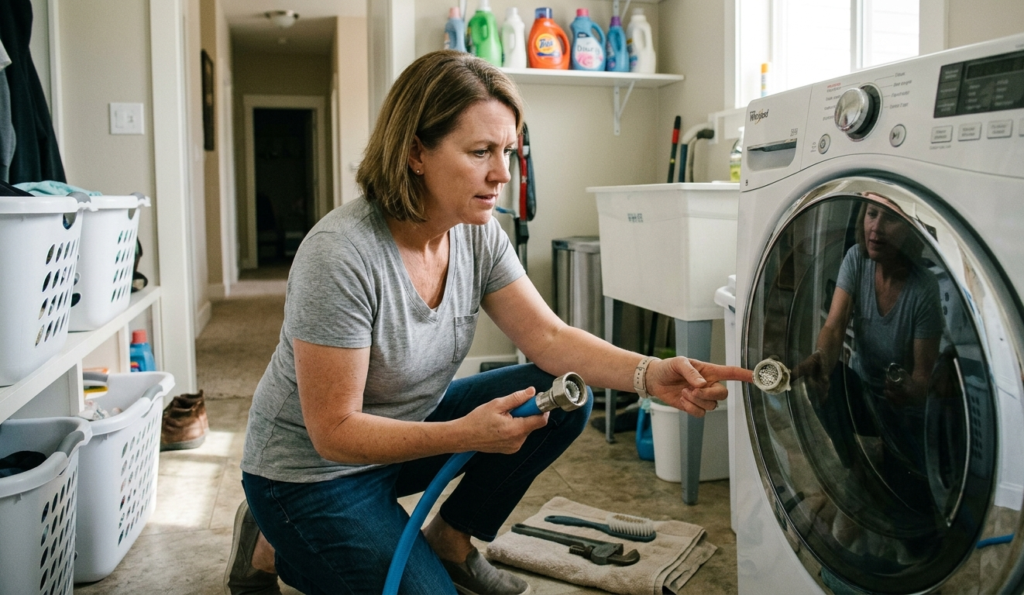
You can check the mesh screens yourself if you know how to use basic hand tools. To stop a flood, turn off the water completely. Use pliers to carefully unscrew the hoses from the back of the washing machine. Check the threaded ports on the machine. You have found your culprit if you see a thick, white, or orange crust on the plastic mesh. You can clean the screens by using a small brush and some white vinegar to get rid of the calcium. LG has a step-by-step guide for slow-filling washers: LG Washer Troubleshooting: Fills Too Slow.
Knowing When It’s Time for Expert Help
While cleaning a simple mesh screen is a great DIY project, internal appliance repairs carry risks. Attempting to disassemble internal valves or mess with electrical wiring can lead to severe water leaks, electrical shocks, or permanent damage to your expensive machine.
If your machine won’t fill after checking the faucets and cleaning the screens, call a pro. Professional technicians have the diagnostic tools to test electronic valves and pressure sensors safely.
When you are facing a broken appliance, you can explore solutions directly at All Valley Appliance Repair to get your household running smoothly again. to get your household running smoothly again. Local experts understand the unique challenges our regional environment poses to home appliances and know exactly how to clear out mineral damage efficiently.
Frequently Asked Questions
How do I know if I have hard water in my area?
You have hard water if you see white, chalky spots on your clean dishes, crusty buildup around your showerheads, or if your soap doesn’t lather easily. You can also get a simple water testing kit from a hardware store near you to find out exactly how many minerals are in your water.
Can I use a water softener to protect my washing machine?
Installing a whole-home water softener is the best way to protect all of your appliances. Softeners take out calcium and magnesium from the water before it gets to your plumbing. This makes your washer, dishwasher, and water heater last much longer.
Why is my washer making a humming sound but not filling?
A humming sound usually means that the computer in the machine is sending power to the water inlet valve, but the valve can’t open. This is a clear sign that the valve is either stuck with mineral scale or the mesh screens are totally blocked.
How often should I clean my washer’s inlet screens?
In our area, it’s a good idea to check and clean these small mesh filters at least once a year. Check them right away if you see that your washer is taking a long time to fill up with water.
Is it worth repairing an older washing machine?
A professional repair is highly recommended if your washer is less than eight years old, and the cost is reasonable. If the unit is very old and has many broken parts, though, buying a new, high-efficiency model might be the better long-term financial choice.
Conclusion
Hard water and everyday wear can cause your washer to stop filling, but with the right troubleshooting steps, you can often identify the issue quickly. For more complex problems, professional repair ensures your appliance is restored safely and efficiently.
You can schedule an inspection today, and we are happy to be at your service.