Why Is My Fridge Freezing Everything? A Repair Pro Explains the Fix.
If you open your fridge and find frozen lettuce, rock-hard eggs and a carton of milk with ice crystals in it, you haven’t done anything wrong. It’s one of the most common calls I get for refrigerator repair, and it’s usually a simple fix when it’s caught early. I help homeowners in Boise, Idaho and the surrounding area, including Caldwell and Nampa, and this problem comes up all year long. Here’s what’s really going on, what you can safely check yourself, and when it’s time to call a pro.
Why Is My Fridge Freezing Everything?
Most of the time, the problem is how cold air gets into the fresh food section. In my experience, the two biggest causes are a stuck air damper and a temperature sensor that gives bad readings.
The damper is a small flap that controls how much cold air moves from the freezer into the fridge side. If it sticks open, super-cold freezer air pours into the fridge nonstop. A faulty temperature sensor causes a similar problem. It tells the fridge it’s warmer than it really is, so the system keeps cooling when it should stop.
A Real Example From Caldwell
Last week, a homeowner in Caldwell called because her lettuce, eggs and even her milk were turning to ice. She had already turned the dial all the way to the warmest setting, and nothing changed. When I pulled the back panel off, I found the damper flap stuck wide open with a bit of frost built up around it. A few jars pushed up against the rear vents weren’t helping either.
I cleared the frost, replaced the damper assembly and showed her how to leave a little breathing room around the vents. By the next morning, her food was cold but not frozen. That’s the kind of fix I’d much rather make than a big, expensive one.
What You Can Safely Check Before Calling
There are a few free checks worth five minutes of your time. These are the ones that actually help:
- Clear the vents. Move anything pressed against the air vents inside the fridge. A jar of pickles or a carton of milk sitting right on a vent can send a stream of cold air onto your food and freeze it.
- Check the temperature setting. It should be around 37°F. If someone nudged it colder by accident, that alone can explain frozen lettuce.
- Look at how full the fridge is. A packed fridge blocks airflow, and a nearly empty one can run oddly, too. Aim for a comfortable middle.
- Try the dollar bill test on the door seal. Close the door on a dollar bill. If it slides out easily, the gasket may be worn. This usually causes frost and warm spots more than freezing, so it won’t always be the culprit, but it’s good to know.
If you’ve cleared the vents, confirmed the setting, and your food is still freezing a day or two later, it’s time to call a pro. You’ve done your part, and we can take it from there.
What Is a Waste of Time
Fiddling with the dial over and over doesn’t help, and it only muddies the picture. Unplugging the fridge for a few minutes won’t reset a stuck damper or a bad sensor either. Neither fixes the real cause.
DIY Mistakes That Make Things Worse
I understand the urge to do something right away when you see a wall of ice and a carton of frozen eggs. But a few common fixes can turn a cheap repair into an expensive one.
Chipping at the Ice
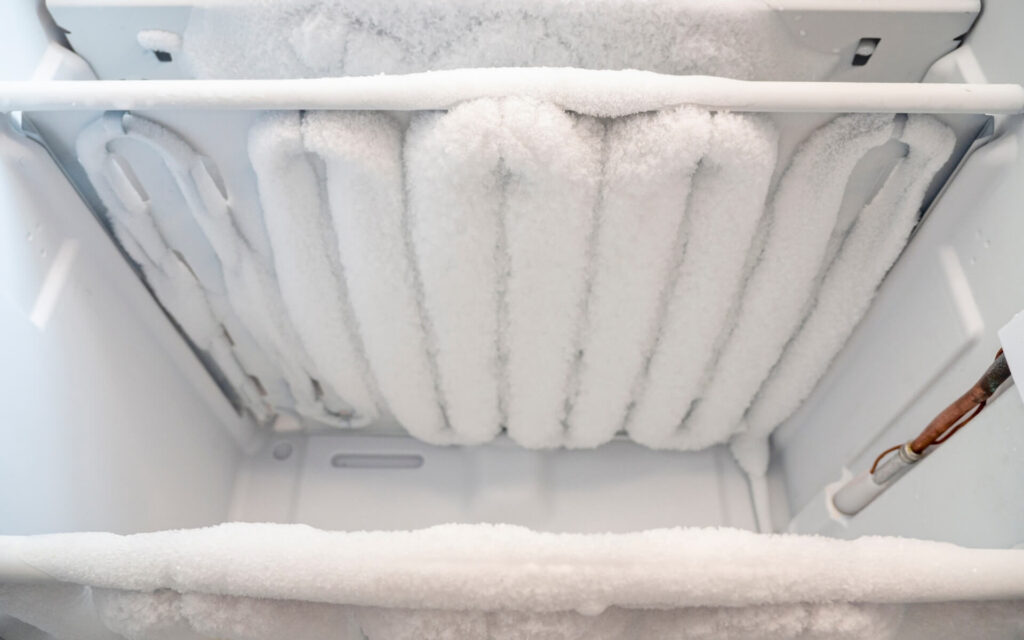
If I could ask homeowners to stop doing just one thing, this would be it. I can’t count how many times I’ve opened a fridge and found a puncture in the evaporator coil from a screwdriver or a butter knife. Once that refrigerant line is pierced, the repair often costs more than the fridge is worth. Keep the tools in the drawer.
Cranking the Thermostat
Turning the dial to the warmest setting rarely fixes anything. The real problem is usually a stuck damper or a faulty sensor sending cold air where it shouldn’t go, and the dial can’t override that.
Relying on Unplugging as the Fix
Unplugging is the one move I’m happy to see. Letting the fridge thaw naturally for a day or so is safe and can clear a frozen-up vent. The mistake is thinking that’s the fix. It’s only a reset, and the ice will likely come back within a week if nothing else changes.
If you see ice, here’s what I recommend:
- Unplug the fridge.
- Put a towel down to catch the water.
- Move your food to a cooler.
- Call a refrigerator repair pro.
Should You Repair or Replace a Freezing Fridge?
My rule of thumb is simple. If the repair costs more than about half the price of a comparable new unit, I lean toward replacing it. Then I adjust for the age and condition of the fridge.
Most freezing problems come down to a stuck damper or a bad temperature sensor, and those are typically affordable fixes. A fridge that is less than eight to ten years old with a part like that is almost always worth repairing. Past the 12- to 15-year mark, or if the compressor, sealed system or cabinet shows wear, I get more cautious, because one repair tends to be followed by another.
Two Homes, Two Different Answers
A couple in Nampa called about a 6-year-old side-by-side that was turning their produce to ice. I found a failed temperature sensor, a part that cost well under a quarter of the price of a new fridge. The rest of the unit looked healthy, so I replaced the sensor, and they were back in business the same day.
The same week, I visited an 18-year-old fridge with a frozen-up evaporator and a coil that was starting to leak. The repair would have cost more than half the price of a new one, and I told them honestly that putting money into it didn’t make sense. They appreciated that I didn’t push a repair just to get the job.
Don’t Wait Too Long to Call
The biggest thing I wish people knew is that waiting is what costs them. A fridge almost never fails out of nowhere. It gives you small warnings first:
- A bit of frost in the back of the fridge
- A carton of milk that’s colder than usual
- A hum that sounds a little different
Most folks shrug those off until a whole week of groceries is ruined or a small fix has become a big one. Acting early on these signs is the cheapest repair strategy there is.
The Cheapest Way to Add Years to Your Fridge
Most articles leave this out. Cleaning the condenser coils once or twice a year is the cheapest way to extend the life of your fridge, and almost nobody does it. It’s a quick job that helps the fridge run more efficiently and with less strain.
Getting Help With Refrigerator Repair in Boise, Idaho
If your fridge is freezing your food, you haven’t done anything wrong, and it’s usually a simple fix when it’s caught early. Clear the vents, check the setting, and keep the ice pick in the drawer. When something still feels off, trust that feeling and call someone who can look at it.
A quick visit now is almost always cheaper and less stressful than a surprise later. If you need refrigerator repair in Boise, Idaho or nearby, reach out to All Valley Appliance Repair. We’re always happy to help you figure it out.