The Safest Way to Clean Oven Glass, From a Boise, ID Oven Repair Pro
The best thing to use is a simple baking soda paste, a damp microfiber cloth, and a little patience. I’m an appliance technician with All Valley Appliance Repair in Caldwell, Idaho, serving homeowners in Boise, ID and the surrounding Treasure Valley. After years of opening oven doors and handling oven repair calls, I can tell you the gentlest method is almost always the best one. Here is what works, what does not, and when it is time to stop and call someone.
My Go-To Method: Baking Soda Paste
When a customer asks what to use on oven glass, my answer is always the same. Baking soda paste works well, it is gentle on your oven, and it is food-safe. Here is how I do it:
- Make sure the oven is completely cool and switched off or unplugged.
- Mix about three tablespoons of baking soda with a little water until it is spreadable.
- Spread the paste over the inside of the glass and let it sit for 15 to 20 minutes. If the grease is really baked on, leave it longer, even overnight.
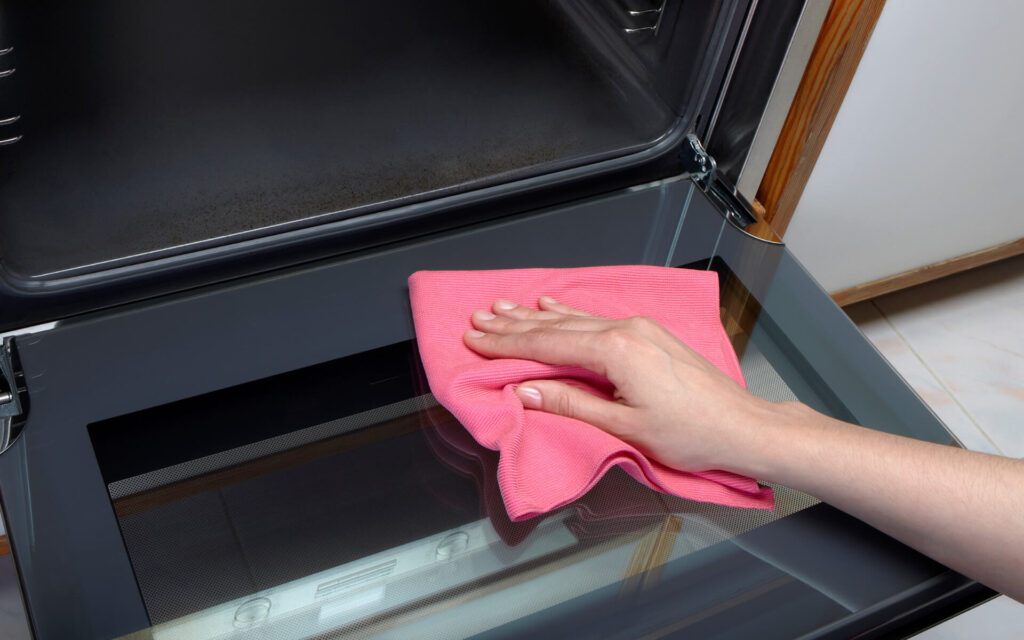
- Wipe the paste away with a damp microfiber cloth, working in small circles.
- For stubborn spots, give the glass a light spritz of white vinegar. The paste will fizz and lift the rest.
- Finish with a dry cloth so no streaks or moisture are left behind.
Keep the cloth damp, not dripping. Moisture that creeps into the wrong places can cause problems with your oven’s igniter and electronics later.
Why I Skip Commercial Oven Sprays
I prefer baking soda to commercial oven sprays for a few reasons. Those sprays can leave harsh fumes and residue in the space where you cook your food. They can also drip into door seals and vents and damage parts. Baking soda is tough on grime without scratching the glass, so you get a clean door without creating new problems.
A Real Example: The Holiday Cleaning That Went Wrong
Last winter, a lovely woman in Nampa called us about her gas range. The door looked cloudy, with streaks she could not wipe away. She had sprayed a heavy-duty aerosol oven cleaner straight onto the glass and left it to soak. When the grime did not budge, she scrubbed hard with a steel wool pad.
When I took the door apart, I found three problems:
- The cleaner had run down into the vent channels and between the glass panes, etching the inner pane and leaving a permanent haze.
- The steel wool had left fine scratches across the surface of the glass.
- The door gasket had become stiff and brittle from the chemical.
We replaced the inner glass panel and the gasket, and the oven was good as new. She felt terrible and told me she was only trying to make the oven look nice for the holidays. I showed her the baking soda method so she would have a safe option next time, and she left relieved and a little wiser. She did what most of us would do. She just did not know there was a better way.
Why Oven Glass Gets Hazy in the First Place
Most people do not realize that an oven door is a sandwich of two or three glass panes with a small air gap between them. That gap keeps the heat inside the oven and the outside of the door cool. Over the years, grease vapor and cooking smoke slip in through the small vents and settle on the inner surfaces. That is why the glass slowly turns hazy or foggy.
What You Can Safely Do Yourself
If the haze is on the front or back of the door glass, you can handle it with baking soda paste and a damp microfiber cloth. If your manual shows an easy way to remove the inner panel, such as a couple of screws or a slide-out tab, you can wipe between the panes carefully. Just keep sprays and soaking wet cloths away from the vents.
Please do not take the door off its hinges unless your manual walks you through it. The hinges are spring-loaded and can snap, and glass panels are heavier and more fragile than they look.
What About the Self-Clean Cycle?
Honestly, I am not a big fan of self-clean cycles, especially with a dirty door. They heat the oven to around 800 to 900 degrees Fahrenheit. Any leftover grease on the glass can bake on and turn into a permanent brown haze, and the extreme heat puts a lot of stress on the glass, the door lock, and the control board.
I have seen it go wrong in the field. One spring, a homeowner ran the cycle right before a family get-together. The electronic control board burned out halfway through, and the door locked shut. It would not unlock until we replaced the board. On another electric range, the inner pane of the door cracked from heat shock after a heavy buildup of grease.
If you choose to run the cycle anyway, follow these steps:
- Wipe out loose spills and pull out the racks first.
- Open a window or turn on the vent fan.
- Keep pets and birds out of the kitchen, since the fumes can bother them.
- Let the oven cool fully before you open the door.
What I recommend instead is the gentle approach. A baking soda paste on the glass and interior, left to sit and then wiped away, keeps things clean with no extreme heat and no wear on your oven’s parts. A quick monthly wipe-down means you will rarely need the cycle at all.
When to Call an Appliance Technician
Knowing when to stop is part of taking care of your oven. Call a professional appliance technician if you notice any of these signs:
- Haze or moisture trapped between the panes that will not wipe away
- Cracks, chips, or deep scratches in the glass
- A door that feels hot on the outside
- A gasket that is torn or stiff
- A door that does not close snugly
- Heat or a burning smell leaking around the edges
- Glass that rattles or looks loose
These signs mean the door is not sealing or insulating the way it should. For this kind of oven repair, it is safer to let a technician take a look.
The Biggest Myth: Tougher Is Better
The biggest myth I hear is that tougher is better. People reach for steel wool, razor blades, or the self-clean cycle, and those usually leave scratches or a permanent haze that is worse than the grime they started with. Another hack I would skip is spraying oven cleaner directly onto the door. It runs into the vents and can get trapped between the panes.
If you have tried a few things and the glass still looks cloudy, please do not be hard on yourself. Baked-on grease is stubborn, and it happens to everyone. Let a baking soda paste sit on the cool glass for a while, wipe it off gently, and repeat if you need to. A little time does the work that scrubbing never will.
Need Oven Repair in Boise, ID and the Treasure Valley?
If you see haze trapped between the panes, a crack, or a door that feels hot on the outside, that is a good moment to call us instead of fighting it alone. At All Valley Appliance Repair, our appliance technician team handles oven repair for homeowners in Caldwell, Nampa, Boise, ID, and the surrounding area. There is no shame in asking for help, and we are happy to take a look.