What Not to Use to Clean a Stove — And What Actually Works
Most people have cleaned their stove with whatever was sitting under the sink — and most people have no idea how much damage they may have caused in the process.
As appliance repair technicians, we see this story play out constantly. A homeowner calls us about a stove that is discolored, scratched, or permanently corroded — and nine times out of ten, the cause is not a mechanical failure. It is a cleaning mistake made with the best of intentions. Good people, wrong products.
This guide covers exactly what not to use on your stove, why it causes damage, and what actually works — straight from the people who repair these appliances for a living.
Why Stove Cleaning Is Not the Same as Regular Cleaning
Here is something most homeowners do not consider: every appliance has its own cleaning rules. The product that works perfectly on your bathroom tiles can permanently destroy a stainless steel cooktop. The scrubber that cuts through grease on pots and pans can scratch a glass burner surface beyond repair.
Before you reach for a cleaner, ask yourself one question — Is this safe for my specific stove? That single moment of pause could save your stove unknowingly.
What You Should Never Use to Clean a Stove
Harsh Oven Cleaners and Lye-Based Chemicals
This is the single most damaging thing we see in appliance repair work, and it happens more often than you would think.
Oven cleaners — especially those containing sodium hydroxide, commonly known as lye — are formulated for the interior cavity of an oven. They are not meant for exposed burners, grates, or cooktop surfaces. When these chemicals come into contact with aluminum or stainless steel, they trigger a chemical reaction that permanently pits, discolors, and corrodes the metal.
This is not surface-level damage. You cannot buff it out or clean it off. We have seen brand-new stoves come into the shop looking years old after just one cleaning session with the wrong product. If a cleaner has strong chemical warnings on the label, keep it away from any exposed metal on your stovetop.
Abrasive Scrubbing Pads and Steel Wool
Scrubbing hard at baked-on grease feels productive, but abrasive pads and steel wool leave micro-scratches across your stove’s surface. Over time, those tiny scratches trap grease and food debris, dull the finish on glass and stainless steel, and create weak points where rust and corrosion can take hold.
The short-term satisfaction of a good scrub is not worth the long-term damage. Always use a non-scratch sponge or a microfiber cloth instead.
Glass Cleaner
Using glass cleaner on a glass cooktop seems like it should make sense — but it does not. Products like these typically contain ammonia and alcohol, which streak, cloud, and gradually degrade glass stovetop surfaces. They are also not designed to cut through cooking grease, so they end up spreading it around rather than removing it.
Lemon Juice and Highly Acidic DIY Cleaners
Lemon juice has earned a strong reputation as a natural cleaning agent, and in many applications, it works well. On stove surfaces — particularly stainless steel — the high acidity can etch and discolor the metal over time. Undiluted white vinegar applied directly to stainless steel and left to sit carries the same risk. If you use vinegar on your stove, dilute it and wipe it off promptly.
Aluminum Foil Liners
Placing aluminum foil on stovetop burner pans to catch drips and make cleanup easier is a common habit. Unfortunately, it causes real problems. Foil liners can block airflow to gas burners and affect performance. On electric coil burners, the foil can melt or fuse directly onto the surface when heat builds up. This is a repair we see regularly, and it is entirely avoidable.
If you want to protect your burner pans, use drip pan liners made specifically for your stove model — not foil.
Ceramic Mugs or Hard Objects Used as Scrapers
This one surprises people, but it does happen. Homeowners sometimes use the edge of a hard kitchen object — a ceramic mug, a heavy utensil — to scrape off a stubborn burnt spot. On glass cooktops, this can cause thermal shock cracks, especially if the surface still holds any residual heat. A crack in a glass cooktop almost always means a full replacement. One misguided scrape can turn a minor mess into a major appliance repair expense.
Use a plastic scraper designed specifically for glass cooktops if you ever need to remove stuck-on debris.
What We Hear From Homeowners After the Damage Is Done
When we arrive at a service call for stove damage caused by cleaning, the conversation is almost always the same. The homeowner wanted their stove to look clean and bright, just like it did when they first bought it. They reached for the strongest cleaner in the cabinet, scrubbed hard, and now there is damage they did not expect and cannot undo.
Nobody sets out to ruin their stove. That is the part that always stands out to us in these situations. These are homeowners who take care of their things and want to do right by their appliances. They simply were not given the right information before they started — and that is the part that bothers us most, because it is so easy to prevent.
What You Should Actually Use to Clean Your Stove
Safe and effective stove cleaning does not require expensive products or special equipment. Our go-to method uses things most people already have at home.
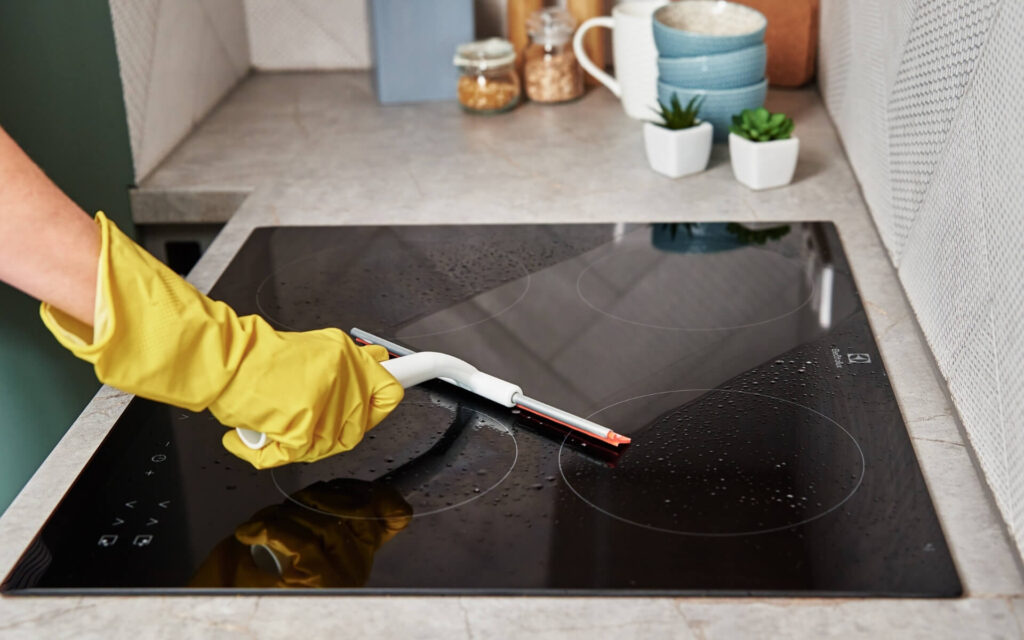
For general surface cleaning, mix warm water with a small amount of dish soap and wipe down the surface with a microfiber cloth. For tough, baked-on spots, make a thick paste using baking soda and water, apply it directly to the affected area, and let it sit for about 15 minutes. Then scrub gently with a non-scratch sponge and wipe clean.
Safe cleaning supplies to keep on hand:
- Warm water and dish soap
- Baking soda
- White vinegar, diluted with water
- Non-scratch sponge
- Microfiber cloth
That combination handles the vast majority of stove cleaning jobs without putting your appliance at risk.
The Most Important Thing to Know Before You Clean Your Stove
Think before you clean. That is the single piece of advice we would give every stove owner before they ever touch a cleaning product.
Every appliance is built differently, and stoves are no exception. The method that works on one surface can destroy another. Taking a minute to look up the right approach for your specific stove type — whether it is gas, electric coil, or glass ceramic — could be the difference between a clean kitchen and an appliance that needs professional repair.
Your stove is designed to last for years with the right care. When in doubt, keep it simple: warm water, dish soap, baking soda, and a soft cloth. Anything stronger than that carries a risk that simply is not worth taking.