How Do You Know if Your Dishwasher Needs Cleaning?
Many homeowners assume a dishwasher cleans itself every time it runs a cycle. Unfortunately, that is far from the truth. Over time, food particles, hard water minerals, grease, and soap scum accumulate inside the machine. Recognizing the early warning signs that your dishwasher needs a proper clean can save you from poor cleaning performance, foul odors, and unnecessary replacement costs.
The Hidden Signs Your Dishwasher Needs Cleaning
Most people wait until their dishwasher starts smelling bad or leaving visible debris on plates before thinking about maintenance. However, some of the most critical warning signs hide in plain sight.
Blocked Spray Arm Jets
If your dishes are coming out with a cloudy film or stubborn food spots, the spray arms are often responsible. Tiny water jets on the spray arms frequently become clogged with hard water deposits, grease, and food bits. When these holes are blocked, water spray patterns are disrupted, leaving sectioned areas of your dish rack completely unwashed.
Black Mold in Gasket Folds
The rubber door seal, or gasket, keeps water inside your unit, but its flexible folds trap moisture and food splashback. If you peel back the seal, you will often find dark grime and black mold buildup. This is a primary source of hidden odors and bacteria growth.
Food Traps Beneath the Sump Filter
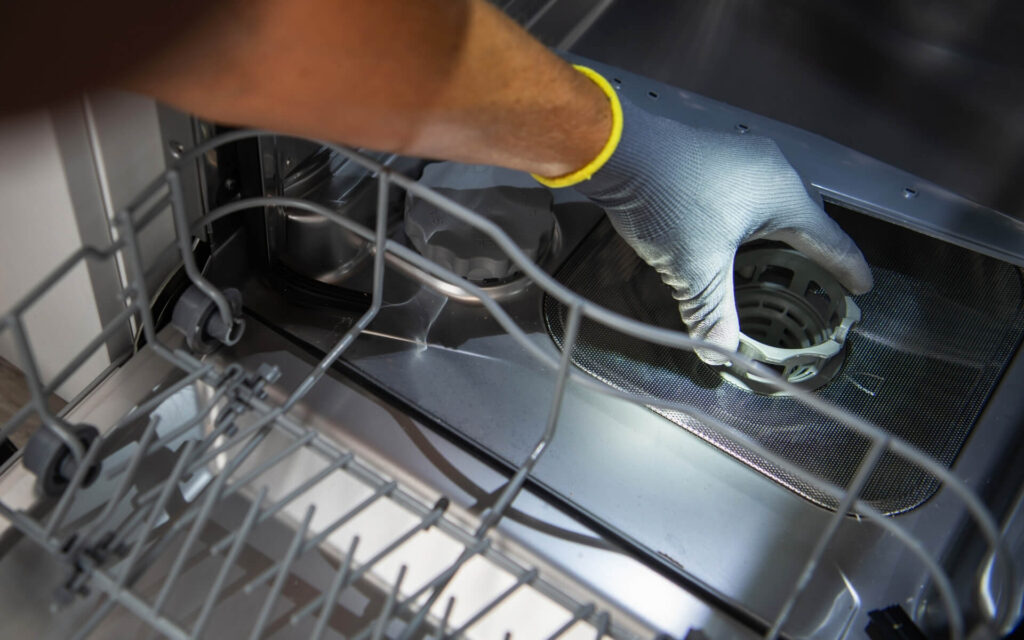
While most users know to rinse the removable top filter, food particles routinely slip beneath it into the sump trap area. Debris settles in this lower basin, creating a stagnant layer of decaying food that degrades water quality during wash cycles.
The Myth of the Broken Dishwasher
A recurring issue I see involves homeowners convincing themselves their dishwasher is failing or completely broken. In many of these cases, the machine does not need to be replaced—it simply needs targeted cleaning.
Clogged spray arms are the leading culprit behind this misconception. When food bits completely plug the spray holes, the spray arms lose pressure or stop rotating altogether. Owners observe dirty dishes cycle after cycle and assume the motor or pump has died. In reality, clearing those tiny jets with a toothpick or small wire restores full water pressure and brings the unit back to peak performance within five minutes.
Commercial Cleaners vs. DIY Methods
When it comes to deep cleaning a dishwasher, there are two main approaches: specialized commercial cleaners or traditional DIY solutions like vinegar and baking soda.
Why Commercial Cleaners Win on Convenience
Commercial dishwasher cleaners are specifically formulated to break down heavy grease and limescale in a single cycle. They are simple to use and deliver consistent results without requiring manual intervention halfway through the process. For busy households, the convenience and efficiency of a commercial cleaner make it the superior choice.
The Drawbacks of DIY Cleaning
Using vinegar and baking soda is an extremely low-cost alternative, but it requires extra effort and multiple steps. Vinegar and baking soda react with each other and neutralize their cleaning properties if combined directly, meaning you must run separate cycles for each ingredient. While DIY methods work fine in a pinch, the extra time and hassle make commercial options far more practical for long-term maintenance.
The Ideal Maintenance Schedule
Keeping your appliance operating smoothly requires a dual approach to routine upkeep and deep cleaning. Adhering to a steady schedule prevents heavy buildup and significantly extends the operational lifespan of your machine.
- Weekly or Bi-Weekly Maintenance: Clear out the removable filter, wipe down the rubber door gasket folds, and visually inspect the spray arm nozzles for rogue debris.
- Deep Cleaning Every 1 to 3 Months: Run a dedicated hot cycle using a quality commercial dishwasher cleaner to strip away mineral deposits, grease, and hidden buildup inside the internal plumbing and sump area.
Stop Pre-Rinsing Your Dishes
One of the most widespread pieces of advice on the internet is that you should thoroughly pre-rinse every dish before loading it into the machine. This practice is entirely counterproductive and actually hurts your dishwasher’s performance.
Modern dishwashers utilize turbidity sensors to evaluate how dirty the water is during the initial rinse phase. These sensors automatically adjust the length, temperature, and intensity of the main wash cycle based on the amount of food soil detected. When you pre-rinse your dishes completely clean, you trick the sensors into assuming the load is lightly soiled. As a result, the machine runs a weaker, shorter cycle, which can result in poorer overall washing performance while wasting gallons of water at the sink.
Scrape off large food scraps into the trash, let the dishwasher sensors do their job, and focus your efforts on keeping the machine clean instead.