How Does a Microwave Work?
A microwave uses electromagnetic waves to heat food. These waves excite water molecules in your food, generating heat quickly and evenly. If you want a more detailed explanation, you can read this guide on how microwave ovens work.
Key components include the following:
Magnetron – produces microwave radiation
Turntable – rotates food for even heating
Control panel – lets you set time and power
Door switch – ensures safety during operation
If any of these parts fail, your microwave may stop working properly.
H2: Microwave Not Working? Common Problems and Fixes
H3: 1. Microwave Won’t Turn On
Possible Causes:
- Loose power plug
- Tripped circuit breaker
- Blown internal fuse
- Faulty door switch
Easy Fixes:
- Check if the microwave is properly plugged in
- Test another appliance in the same outlet
- Reset your circuit breaker
- Make sure the door is fully closed
If the microwave fuse is blown, replacing it might fix the problem, but be cautious, or consider seeking help from a professional.
2. Microwave Not Heating Food
- Faulty magnetron
- Broken high-voltage diode
- Defective capacitor
What You Can Do:
- Try heating a different food item to confirm the issue
- Reset the microwave by unplugging it for a few minutes
These components involve high voltage. It’s safer to call a technician if the problem persists.
3. Microwave Plate Not Spinning
Possible Causes:
- Misaligned turntable
- Dirty or blocked roller ring
- Faulty turntable motor
Easy Fixes:
- Remove and reposition the glass plate properly
- Clean the roller ring and base
- Check for food debris blocking movement
4. Microwave Making Strange Noises
Possible Causes:
- Worn-out motor
- Loose internal parts
- Faulty magnetron
What to Do:
- Stop using the microwave immediately if the noise is unusual
- Inspect for loose items inside
- Call a technician if the sound continues
5. Microwave Buttons Not Responding
Possible Causes:
- Dirty control panel
- Moisture buildup
- Faulty touchpad
Easy Fixes:
- Clean the keypad with a dry cloth
- Unplug and restart the microwave
- Avoid pressing buttons with wet hands
Safety Tips When Fixing a Microwave
Before attempting any repair, keep these safety tips in mind:
- Always unplug the microwave before inspecting
- Avoid touching internal components
- Never operate a damaged microwave
- Call a professional for electrical issues
When Should You Call a Professional?
Not all microwave issues are DIY-friendly. You should contact a technician if:
- The microwave is not heating at all
- There’s a burning smell or sparks
- Internal components need replacement
- The unit is still under warranty
Professional repairs ensure safety and prevent further damage. If you need expert assistance with microwave repair, feel free to contact us.
Tips to Prevent Microwave Problems
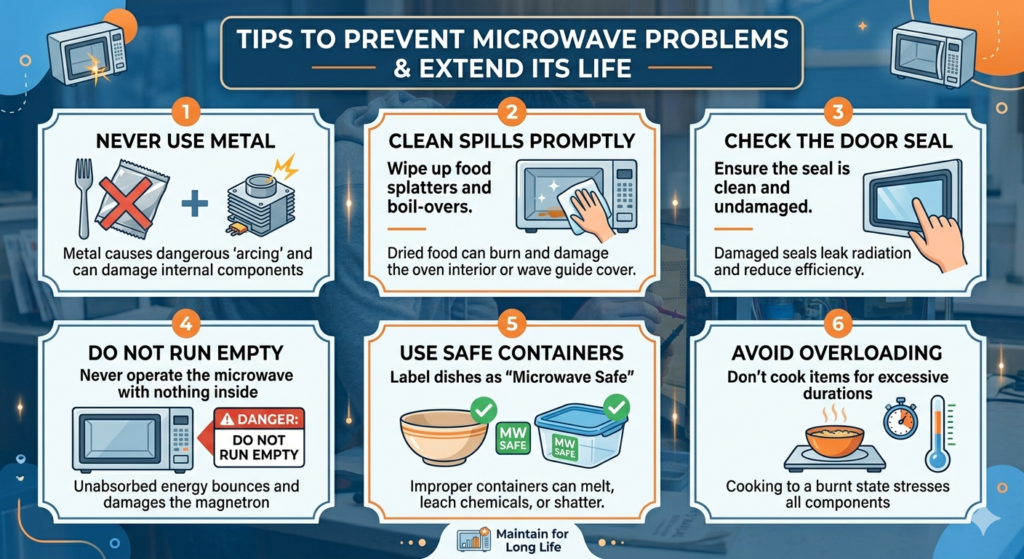
Preventive care can extend your microwave’s lifespan:
- Clean your microwave regularly
- Avoid using metal containers
- Use microwave-safe dishes
- Don’t run it empty
- Check the door seal often
For more expert advice, check this guide on microwave safety tips to prevent burns and accidents.
Frequently Asked Questions (FAQs)
1. Why is my microwave running but not heating?
This is usually caused by a faulty magnetron or diode. These parts require professional repair.
2. Is it safe to repair a microwave at home?
Basic troubleshooting is safe, but internal repairs involving electrical parts should be handled by experts.
3. How long should a microwave last?
Most microwaves last 7–10 years with proper care.
4. Can I use a microwave with a broken door?
No. A damaged door can leak radiation and is unsafe.
5. What should I do if my microwave sparks?
Stop using it immediately. Sparks are often caused by metal objects or internal damage.
Conclusion
A microwave not working doesn’t always mean you need a replacement. Many common issues, like power problems, a non-spinning plate, or unresponsive buttons, can be fixed with simple steps at home.
However, for more serious issues such as heating failures or electrical faults, it’s best to call a professional to ensure safety.
By understanding how your microwave works and following proper maintenance tips, you can keep it running smoothly for years.